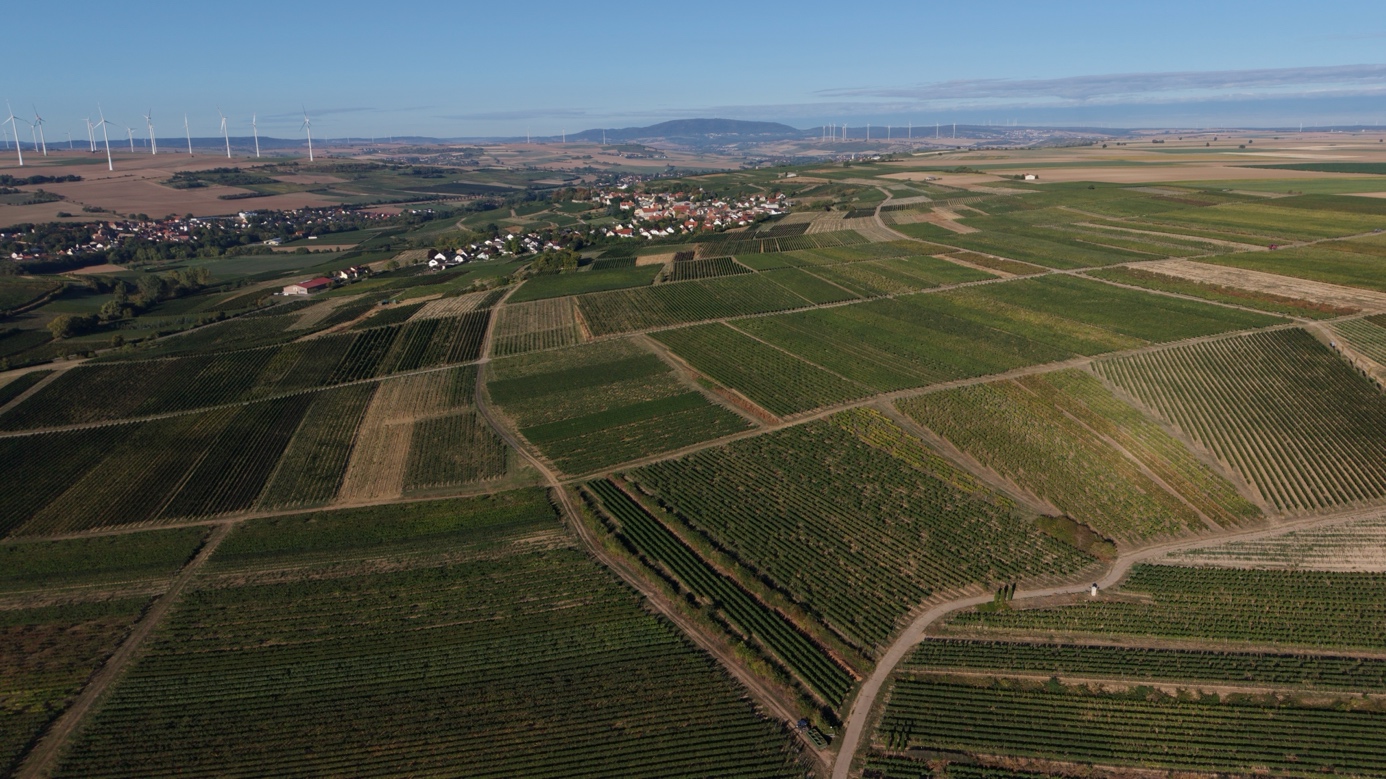
My connection with Zellertal, though, goes back further than my work there as a winemaker. My parents’ estate was already in Hohen-Sülzen then, where Battenfeld Spanier is still at home today. Zellertal is only a stone’s throw away. My grandfather would take me there regularly when I was just a boy.
I remember the open hills, the wind and those pale, lean soils shaped by rock and limestone. Of course, there was much I could not yet make sense of. But the landscape caught my imagination early on. Around Wachenheim stood some remarkably large and imposing farmsteads. To me, they suggested that wines must once have been made here that were sought after far beyond the valley. Farmsteads like these did not come into being without good reason.
That thought stayed with me. There had to be something hidden in this valley that had been forgotten over time.
That is why, over the coming months, I would like to tell you about Zellertal. This will not be a complete chronicle, nor do I claim to know the one definitive history of this place. It is my personal view of the valley. Shaped by my memories, my experiences and more than 30 years of work in its vineyards. I would like you to join me on this journey of mine. To the vineyard sites, the soils and the people, but also through the questions, detours and discoveries that have changed the way I see wine.
Many people today know Frauenberg, Zellerweg am Schwarzen Herrgott, Kreuzberg, Auf dem Kalkofen or our C.O. from the Steinlinden parcel. But behind these names lies a longer story. It is a story of limestone, wind and a cool climate, of individual parcels and the patience it takes before a vineyard truly begins to speak.
The story of my own work in Zellertal began in 1994.
My First 3,000 Square Metres
Until then, I had not farmed a single vineyard site in Zellertal. My first parcel was 3,000 square metres of Riesling in Frauenberg.
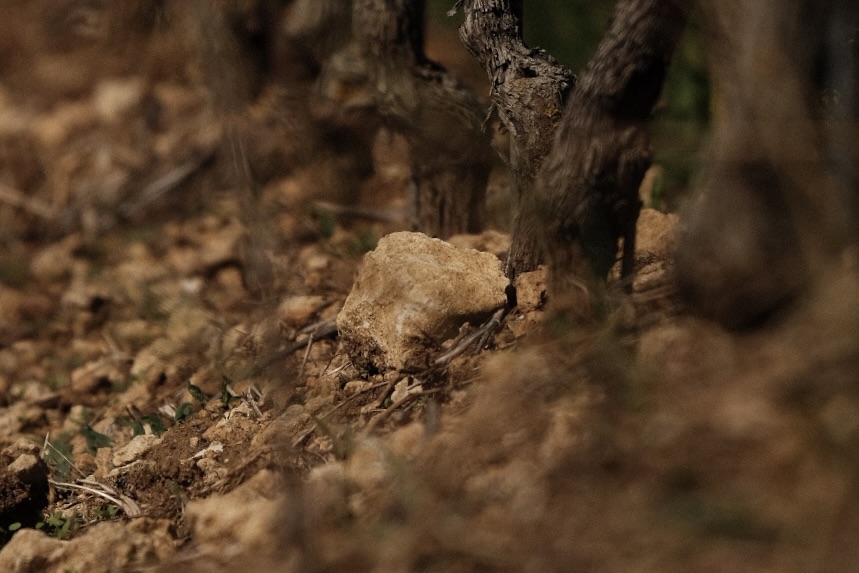
The vines were in good condition. But what particularly held my attention from the very beginning was the soil. Limestone was everywhere. You could see it, feel it; it shaped everything. Then there were the cool conditions, the clear light and the wind that moved almost constantly through the vines. Zellertal had a character all its own for me from the outset. It was more open and more rugged than the Wonnegau. The Donnersberg rose to the west, with the gentle hills of the valley before it. Above it all was that sense of space. So much air, so much light and, time and again beneath my feet, pale, bare limestone.
At the time, I had no fixed idea of what a Riesling from Frauenberg should one day taste like. The style of my own wines was different then, too. But I sensed a particular tension in this place. For me, Frauenberg was therefore less the answer to a fully formed idea than the beginning of a question:
What lies in this soil, and how precisely can we capture it later in the wine?
From early on, I was convinced that Zellertal could have a great future.
A Conviction That Took Time
I was not alone in thinking this at the time, but the view was far from universal. Some fellow winemakers watched with curiosity as I tried things out there. Others were more reserved about my enthusiasm.
That was quite understandable. In the mid-1990s, Zellertal had yet to regain the standing it enjoys today. Many older winemakers, in particular, had known the region under more difficult economic circumstances. They knew from their own experience that cool conditions, wind and late ripening could be appealing, but always carried a risk as well.
So where I saw a particular opportunity, others were more cautious. Some of what I had in mind probably seemed distinctly optimistic at the time, especially my early organic methods and, later, my biodynamic approach. Yet even then I was convinced: without an ecological approach, there can be no modern winegrowing. And without modern winegrowing, there can be no great German wine in the future.
For me, that reserve was a reason to look more closely. I wanted to understand why the landscape here felt so different from the countryside around Hohen-Sülzen. Why the Rieslings developed a tension of their own. And why the combination of limestone, cool conditions and wind could give rise to a character I could not find in quite the same way anywhere else.
Over the years, I also gained a clearer idea of how I wanted to support this expression of place in the cellar: with fewer interventions, more time and the trust that the winemaker’s voice should never be louder than that of the place itself.
Increasingly, the crucial question for me was how much of Zellertal could be preserved in the bottle.
2001: The Wine Begins to Tell Its Story
Frauenberg needed time, and so did I. In 2001, I had the clear feeling for the first time that the wine was beginning to reveal exactly what I had been looking for. It became more precise, tauter and cooler in character. The fruit did not disappear, but it no longer pushed itself to the fore. Instead, the limestone, the structure and the tension of the place came through more clearly.
That was a special moment for me. For the first time, I recognised in the glass something of what had drawn me to the vineyard years before. It was not a sudden revelation. More a quiet, but very clear, sense that I was on the right path.
That experience shaped the way I saw Zellertal, and it changed me as a winemaker. Over the years, those first 3,000 square metres were joined by other parcels and vineyard sites. Frauenberg, Zellerweg am Schwarzen Herrgott, Kreuzberg, Auf dem Kalkofen and the Steinlinden parcel, where our C.O. comes from.
Each of these places has its own character. Together, for me, they tell the story of a valley that was underestimated for a long time, and whose potential has only gradually come to light again.
Austere, Cool and Full of Light
If I had to describe Zellertal in just a few words today, they would be these: austere, cool, with pure mineral precision.
Then there are the Donnersberg, the wind and the gentle hills. They shape Zellertal and have long been part of my life, too. I have worked in the vineyards here for more than 30 years. No two vintages are alike; each calls for its own decisions. In this series, I would like to tell you about my journey. About my beginnings in Zellertal, and how the valley, its vineyards and its people have shaped my work and who I am.
Over five newsletters, published every two months, I would like to take you on my journey through Zellertal. The next chapter takes us deeper into the landscape and history of the valley. We will then turn to the individual vineyard sites, their soils and the wines they have given us.
The next four stops on this journey:
- The Donnersberg and a New Way of Thinking About Riesling
- The Schwarzer Herrgott and an Arbitrary Border
- Kreuzberg — A Vineyard Returns
- Why Zellertal Is Already the Future
This is my personal story of this place. As I have experienced it, and as it has shaped my path.
My work in Zellertal began in 1994, with 3,000 square metres of Riesling in Frauenberg. But my connection with this valley goes back further. It began on those drives with my grandfather, with pale stones beneath my feet and an early sense that something special lay hidden in this austere landscape.
I am still discovering it today.
Yours,
H.O. Spanier